
Alberta Justice Minister Joins Wildrose in Supporting Free Speech Motion


- Details
- Created on Friday, 21 March 2014 16:49
- Hits: 2503
Another day, another reason to end human rights commissions
- Details
- Created on Friday, 21 February 2014 18:29
- Hits: 1882
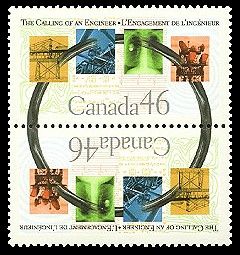 By Ezra Levant, SunMedia, Feb 17 2014: Engineers wear an iron ring on their pinky finger. It’s a tradition that began in 1925 to commemorate a terrible engineering disaster.
The massive Quebec Bridge across the Saint Lawrence River collapsed – twice. Once in 1907. And again in 1916. The same bridge. Eighty-eight people were killed.
A Royal Commission of Inquiry ruled “the failure cannot be attributed directly to any cause other than errors in judgment on the part of… two engineers.” That disaster led to an overhaul in the credentialing of engineers. In Canada, it’s now illegal to call yourself an engineer without passing difficult exams, and being subject to the oversight of engineering associations. It’s similar to the requirements to call yourself a doctor.
But to Ladislav Mihaly, those rules are just too tough.
Devaluing Rights
- Details
- Created on Tuesday, 11 February 2014 22:55
- Hits: 4152
 One need only look at debates in Parliament and decisions from the tribunals and courts to see that what qualifies as a right, or a violation thereof, is as murky as the private life of Justin Bieber. There is a lot of talk, but very little substance to give that talk a concrete foundation.
In a decision that came out on January 31st, the Federal Court of Appeal ruled that Section 13 of the Canadian Human Rights Act, which makes it a crime to communicate something which "may" result in someone feeling hated, is both constitutional and in accord with freedom of expression. In other words, according to this decision, there is no legal reason to scrap Section 13, even if there are other good reasons for doing so. This ruling flies in the face of a review conducted by the Canadian Human Rights Tribunal itself, which found that Section 13 was unconstitutional. And it also comes on the heals of Parliament voting to scrap this very section.
What this means is that the court is giving a green light to BC, Alberta, and Saskatchewan to maintain their existing human right codes which have similar problematic sections about "hate speech." It also means that the door is left open for a new federal government to introduce Section 13 under a different name.
And it comes around the same time as the CHRC criticized Quebec's Values Charter on the grounds that it would violate Quebec's Charter of Rights and Freedoms. When the Canadian Human Rights Act, the Canadian Charter of Rights and Freedoms, and the Quebec Charter of Rights and Freedoms are brought to bear on the Quebec Values Charter, it is of little surprise that we will hear a hundred different conclusions about whether the legislation is "constitutional," whatever that means.
The problem is that the legal community is used to referencing itself as the authority and not having to dig deeper and explain its own foundations and answer even the most basic questions such as "what is a right" and "who grants rights" or "who decides the hierarchy of rights." This comes, at least in part, because we have a legal system that has done its best to remove any Divine authority and yet still wants to uphold the concepts (e.g. rights) which only came to our legal tradition because of our Judeo-Christian heritage (such as the 1215 Magna Carta). Our secular society can't stand the notion that the concepts we hold dear require a religious foundation to give them meaning. You can find a lot more on this topic here.
Canadians of all stripes should be able to agree that now, more than ever, our government officials, judges, and tribunals need to define their terms. Then we can at least know where we disagree. As it stands, rights are becoming an empty concept. And that is a shame, since they need not be.
Reminder: Petition for Free Expression
- Details
- Created on Tuesday, 07 January 2014 17:02
- Hits: 2090
 The Justice Centre for Constitutional Freedoms has provided a petition (click here) calling on the Legislature of BC, AB, and SK to amend their respective human rights codes and acts to protect free expression. We encourage our readers to print it off, get some signatures, and follow the instructions on the petition:
Whereas the federal government has repealed Section 13 of the Canadian Human Rights Act which formerly violated the historic and fundamental freedom of expression of Canadians;
and Whereas British Columbia, Alberta and Saskatchewan are the only three jurisdictions in Canada which use human rights legislation to censor the free expression of citizens; and Whereas seven other Canadian provinces, and the federal government, have human rights legislation that does not censor the free expression of citizens;
and Whereas hate speech is addressed by the Criminal Code of Canada and such restrictions should not be duplicated or expanded upon by the provinces;
We, the undersigned citizens of Canada, call upon the Legislative Assemblies of B.C., Alberta and Saskatchewan to enact legislation in their respective jurisdictions to: repeal Section 7 of the B.C. Human Rights Code; and repeal Section 3 of the Alberta Human Rights Act; and repeal Section 14 of the Saskatchewan Human Rights Code.
Discrimination versus association
- Details
- Created on Thursday, 29 August 2013 13:46
- Hits: 2428
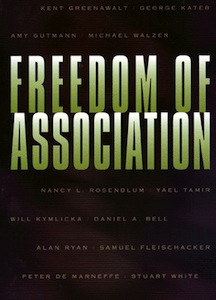 This writer hits the nail on the head. Our society (or more accurately, our political elite and our human rights professionals) are so afraid of the idea of discrimination, that even when “discrimination” is totally justifiable or even, dare I write it, good, then the gloves come off, the human rights police are dispatched and the offending persons or institutions are brought to heel.
Indeed, that is what seems to be going on with the change in Christian Horizons' employment policy. They had a complaint a few years back which ended up in front of a human rights tribunal (see a summary of the facts of that case here). The tribunal ruled that, even though Christian Horizons was a Christian organization, they couldn’t limit their hiring to only Christians (or, if they could, the organization was not allowed to define what “Christian” meant in either doctrine or conduct).
As this column in the Ottawa Citizen correctly argues, limiting hiring to similarly identifying folks should not be seen as discrimination but rather association. The freedom of association is a fundamental freedom, protected by section 2(d) of the Charter. This argument corrects the false beliefs expressed in an earlier editorial in the same paper which suggests that the government can never contract with any association that defines itself as something, be it by creed or culture or philosophical or political outlook, etc.
Racism and discrimination: where are we headed?
- Details
- Created on Wednesday, 28 August 2013 15:58
- Hits: 2637
 Racism is an awful reality of life, something no government or society has yet been able to eradicate. Racists and their ilk attack something that is intrinsic to human life and human personhood, something that is sacred.
This week we celebrate the 50th anniversary of the famous “I have a dream” speech, Dr. Martin Luther King Jr.’s impassioned plea to a crowd of 250,000 and to a nation of millions that there should be equality between black men and white men, white girls and black girls.
In many respects, here in North America, we have come a long way since that speech 50 years ago. Society (more or less) does not tolerate racism, even though racists still exist at the fringes. And our governments too, largely because of the work of King and his followers, have enacted civil rights legislation to clamp down on racism.
Looking back, we see good intentions in the government's attempt to eradicate racism. And we see that society has reacted positively to changes (although I would point out that, in fact, society changed first, and then government responded by enacting laws that were popular). So, 50 years later, where to from here?
Some people will point out that racism still exists. Indeed it does. As mentioned above, there remain repugnant racists who revel in the margins of society. But human rights scholars, professionals and commissioners go one step further – they argue that racism is not just on the fringe; it’s still very much present in our society, in our institutions and in ourselves. It’s systemic. We are told that we don’t even know it exists, we don’t see it – it’s just there.
When it comes to policing racism, we’ve come a long way. But perhaps we’ve come too far. Our professional human rights experts are so eager to expunge racism that they are beginning to see it in places it might not exist.
A common sense approach to idiocy
- Details
- Created on Friday, 23 August 2013 11:29
- Hits: 2396
 This is a sad story of a despicable and cowardly person who anonymously wrote a hateful letter to her neighbour. In it, she ranted about the neighbour’s autistic grandson, telling her that the boy, a “wild animal”, ought to be euthanized.
As Liberal Senator Jim Munson, an autism advocate, said, “This is a crime of ignorance and a crime of stupidity, and I think it’s an exception rather than the rule.”
It is good and right to respond with outrage in this case. And it is good to see that the "community has united" over this, lending support to the family of the autistic boy.
But should a human rights complaint be filed and the person who wrote this stupid, ignorant and offensive letter be fined for saying something so cruel, as some people will inevitably suggest needs to happen? Or, since this happened in Ontario, which does not have a hate speech provision in its Human Rights Code, should the Ontario Code be amended? Absolutely not. Should the community ostracize the writer? Absolutely. She should feel absolutely ashamed for what was written.
And when the community bands together, the appropriate punishments and lessons happen. As Laurie Mawlam, executive director of Autism Canada, said, “I think the person who wrote the letter has their own issues. Personally, I think they’ve gotten their punishment.”
The question always is, what is the proper role for the State to play, and what is the role of individuals, of families and of communities? In this sad story, the family and the community stepped up and fulfilled their role. Good on them. Hopefully the State remembers that its role is not punisher of mean and offensive opinions, even ones we find really, really awful.
The right to procedural accommodation
- Details
- Created on Thursday, 22 August 2013 11:26
- Hits: 2289
 This short explanation on the right to procedural accommodation is a bit more technical but worth working through. I'll attempt a brief summary: at the federal level, the Canada Human Rights Act does not require a duty of federal employers to make special accommodations for employees procedurally if it has demonstrated that it has a bona fide (i.e. good faith) occupational requirement that excludes an employee from certain types of work because of religion or disability, etc. (An example would be a diabetic excluded from a posting to Afghanistan because of the lack of medical facilities there).
This is different than in BC, where there is an independent right to procedural accommodation: even if an employer has proven that he/she has a bona fide occupational requirement for a job, where to accommodate a certain employee would place undue hardship on the employer, nevertheless, if the employer has not made special accommodations for the employee during the process of determining whether there is a bona fide occupational requirement, the employer can still be guilty of a human rights violation.
The federal model is the better one because there is less cost and hassle for the employer, with the same end result for the employee. BC should fix their Code and bring it in line with the federal Act.
I like the other discrimination test better
- Details
- Created on Wednesday, 21 August 2013 12:57
- Hits: 2322
 The Ontario Court of Appeal has overturned a decision by the Divisional Court which overturned a race discrimination claim by the Ontario Human Rights Tribunal. The Court of Appeal has confirmed that the test for finding discrimination under the Ontario Human Rights Code does not require that the discrimination be intentional.
The Story: The appellants in this case (the complainants at the original Tribunal hearing) entered a courthouse library in which only lawyers and law students were permitted. Two were lawyers and one was a law student. All three of them were black. A librarian approached the applicants and asked them to produce ID, but did not ask anyone else for ID at that time. Jumping to the conclusion that it must be because they are black, the offended complainants quickly brought applications to the Human Rights Tribunal alleging discrimination.
Note: There was no harm done. They were lawyers, they had ID, they were allowed to stay in the lounge. Note as well: it was part of the librarian’s job to make sure that only lawyers and law students entered the library, so when she didn't recognize them, she asked for ID. Note also: The allegation of racism requires an inquiry into the mind and internal motivations of the librarian – it demands the reading of her thoughts at that time, a rather tricky exercise at the best of times.
In racism claims, preference given to allegations over conclusive proof
- Details
- Created on Tuesday, 20 August 2013 21:18
- Hits: 2631
 In racism claims, it seems the BC Human Rights Tribunal gives preference to allegations of racist behaviour (by visible minorities) over conclusive proof of non-racist behaviour (by corporations or members of the visible majority). In a rather rich ruling, Tribunal member Norman Trerise found that the Shark Club of Langley discriminated against three people on the basis of the colour of their skin.
Here’s the story: three Indo-Canadians showed up late to a reserved party at the club. The doormen refuse to let them in. While arguing about it, other patrons were allowed in. The three complainers jumped to the conclusion that the only reason they weren’t allowed in is because they are Indo-Canadian. This same sob-story is given at the Tribunal hearing, which Norm swallows hook, line and sinker.
Now, I’ve read the decision, and there are inconsistencies in the testimony of both the doormen and the manager, which work against the club. But there is a piece of evidence that mitigates in favour of the club, a piece that is really, really hard to ignore. Norm, the ol’ rascal, manages to pull it off though! What piece of evidence is that? Well, the fact that there was already an entire party of Indo-Canadians inside the restaurant!
So, how can doormen be found guilty of barring entry to Indo-Canadians on the basis of race, when those same doormen already allowed many members of the same racial group into the restaurant? In fact, the complainers readily admitted that in the whole argument with the doormen, never once was a racial slur uttered (para. 37). Furthermore, some of the people barred from the premises that night had been to this same club numerous other times (para. 149), which begs the question, why would these suffering patrons return repeatedly to a racist club?