
What can Whatcott Say?


- Details
- Created on Tuesday, 18 October 2011 16:00
- Hits: 2269
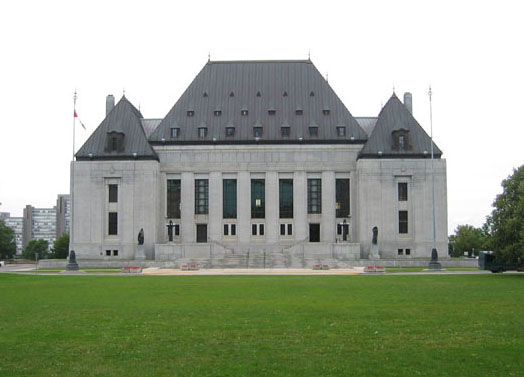 October 18, 2011 - André Schutten - The William Whatcott case was heard by the Supreme Court of Canada last week Wednesday. Being one of the lawyer present, I had a pretty good view of what was going on. There is a lot at stake with this case. That's probably why there was an unprecedented number of intervenors. And it seems like many news agencies across the political spectrum got the point too - there is much at stake!
So, what did Bill do wrong? Why was his lawyer trying to defend him at the Supreme Court? Mr. Whatcott doesn't like the practice of homosexuality and thinks it is unhealthy, immoral and is risky behaviour. And he wants to share his concern about this behaviour with others. He distributed (and continues to distribute) fliers on this topic, looking especially at the issue from a public policy point of view: should our governments be encouraging this type of behaviour in schools?
Non-Muslims Need Not Apply
- Details
- Created on Saturday, 15 October 2011 04:49
- Hits: 2139
The National Post recently ran a story about housing advertisements in
When the reporter called the OHRC to ask about these violations, their response was telling. They first pointed out that the Commission has no jurisdiction any longer to launch complaints, and therefore had no enforcement powers to apply to these housing ads. This, of course, is entirely correct. The McGuinty government has thankfully removed the Commission’s mandate to investigate and even launch complaints of their own. So the only way that the state could take action against the housing ads is for a private person to launch a complaint with the tribunal.
However, the Commission does do broad investigations to determine the extent of particular types of discrimination, and then issue guidelines and policies in response. One such investigation was behind the housing policy to begin with. Referring to that investigation, the spokeswoman from the Commission claimed that the number of ads favouring a race or creed was not substantial. “We tend to usually see the reverse of that, such as ‘no blacks need apply, no people who are LGBT can live here, nobody who’s Chinese,’ so I think that tends to be the larger issue,” she said.
Being the very agency tasked with stamping out stereotypes, it’s amazing how good they are at delivering them. Rather than calling a spade a spade, labeling discrimination as discrimination, she deflects the issue towards more preferred targets – those who want to exclude blacks, Chinese, and sexual minorities from their private property.
OHRC, your bias is showing. Again.
Here at Stand Up For Freedom, we do not believe that anyone has a right to someone else’s property. If you own real estate, you should be free to grant or refuse entry to whomever you like. If you have the money to purchase goods or services from someone else, you should be able to choose to buy them from whomever you like. If you have a good or service that you would like to sell, you should be able to sell them to whomever you like. The criteria you use should be completely up to you - no government bureaucracy should be tasked with monitoring these decisions to see if they pass some sort of moral test.
That, of course, does not mean that these decisions are amoral. Certainly not. However, the danger is immense when the state can interfere with decisions that are otherwise legal, except that they are made in conjunction with unapproved thoughts or motives. The threat to fundamental freedoms is far too great
Consequently, we do not believe that the Commission or Tribunal should do anything about the “Muslim-only” housing ads. But at the same time, there should be nothing against “gay-only”, “straight-only”, “black-only”, or even “white-only” ads, repulsive as the motivations may be for each of these restrictions.
There are several cases which even the Commission agrees discrimination is in order. For example, a Methodist church is allowed to specify that their pastor be of the Methodist faith. But the Commission believes that it should have the power to decide if and when these exemptions can be granted.
As the above bias illustrates, that is a very bad idea. Return the freedom to property owners, and let them face the natural consequences for their moral decisions, right or wrong.
The Absurd is Commonplace at the Tribunal
- Details
- Created on Sunday, 02 October 2011 05:06
- Hits: 2810
A police officer who smokes crack while on duty. A public-school teacher who calls in sick, works for a private company, and collects both paychecks. What do both of these individuals have in common? They have complaints currently before a human rights tribunal in which they are trying to escape the natural consequences of their reprehensible actions, and, win or lose, financially punish their employers for daring to insist upon standards of behavior in the workplace.
While still employed by the Brantford Police Force, constable Jeffrey Servos notified his superiors of his drug habit, and was sent repeatedly for rehabilitation. Concerned about the likelihood of Servos relapsing, the force installed a pinhole camera in his cruiser. He was observed smoking crack cocaine and snorting Oxycontin while on duty in June of 2009. The police also received reports that an officer was buying unusual amounts of painkillers. Furthermore, several drug dealers claimed that they were robbed by a cop.
Servos was slapped with a series of charges under the Police Act and one count of drug possession under the Criminal Code. After pleading guilty to the possession charge, Servos quit the force and the Police Act charges were withdrawn.
Now, Servos is pursuing a complaint against the police force, alleging that they did not appropriately accommodate his addiction, which is incredibly within the definition of “disability” under the Code. Absurd? The Ontario Human Rights Tribunal didn’t think so, and ordered a hearing.
We shift to the west coast, where Karen Lessey is a special education assistant in the
Lessey was terminated for “theft of time and serious breach of trust”. She claims that the symptoms of her “specific medical condition” were worse in the morning, but didn’t prevent her from meeting her obligations in the evening. She launched a discrimination complaint with the BC human rights tribunal, which ordered a hearing.
We all acknowledge that justice must apply equally to even the worst among us. Yet here are two individuals being entertained by our justice system who are claiming entitlements specifically on the basis of their objectionable behavior. To top it all off, their employers are financially and logistically penalized for enforcing a clearly reasonable standard of professionalism. Absurdity does indeed appear commonplace in our country’s kangaroo courts.
Internet hate speech section of rights code could face repeal
- Details
- Created on Wednesday, 28 September 2011 16:13
- Hits: 1792
Stand Up for Freedom Canada says: Our hats go off to this courageous MP for standing up for freedom. But really, this should be a government bill, and with much more sweeping changes than Section 13.
Charles Lewis, National Post Sept 28 2011: A Tory MP plans to introduce legislation as early as Friday calling for the repeal of a section in the federal human rights code banning hate speech over the Internet. Despite being a backbencher, Brian Storseth is convinced the bill will succeed because nearly every Tory MP opposes Section 13, and he believes the Harper government wants to see it repealed.
“Section 13 suppresses the basic right to freedom of speech in our society that is guaranteed under the Charter of Rights & Freedoms,” said Mr. Storseth, who represents the Alberta riding of Westlock-St. Paul. Read more
Human Rights Laws are Eroding our Democracy
- Details
- Created on Tuesday, 27 September 2011 05:42
- Hits: 2089
By John Carpay
Should a man be forced to pay $17,500 to four individuals who felt offended by the flyers he distributed?
The Supreme Court of Canada will decide this question in October, when it hears the case of Saskatchewan Human Rights Commission versus William Whatcott.
In 2001 and 2002, Whatcott peacefully distributed flyers in Regina and Saskatoon.
His flyers expressed opposition to teaching children in public schools about homosexuality, and also expressed, in polemical language, his religious objections to homosexual behaviour.
When four people complained that their feelings were hurt by the flyers, Whatcott was prosecuted under Saskatchewan's "human rights" law, ordered to pay $17,500 to the complainants and ordered to refrain from distributing the same or similar flyers.
Alberta's human rights legislation is similar to Saskatchewan's, and has resulted in the prosecution of Ezra Levant for publishing the Danish cartoons of Mohammed in the former Western Standard magazine, the prosecution of Rev. Stephen Boissoin over a letter to the editor in the Red Deer Advocate, and the prosecution of Catholic Bishop Fred Henry for articulating his church's position against same-sex marriage.
The arrogance of the censors is the common element in all of these human rights prosecutions. The censors who want to shut down other people's speech think that their own opinions are not just opinions, but absolute truth, which therefore entitles the censors to silence those who disagree. But John Stuart Mill warned us in his 1859 essay On Liberty: "We can never be sure that the opinion we are endeavouring to stifle is a false opinion; and if we were sure, stifling it would be an evil still."
Whatcott argues that some forms of sexual conduct are unhealthy, unnatural and immoral, and therefore should not be portrayed in a positive light to schoolchildren. Many Canadians would agree with him. The human rights commission believes that all sexual behaviour between consenting adults is inherently good, and that criticizing some sexual practices is an attack on the dignity and worth of people who engage in them.
Religious teachings against adultery, fornication, common-law relationships and homosexual behaviour run afoul of human rights codes because some listeners perceive the teachings as discriminatory or hateful. The Whatcott case highlights the direct conflict between religious freedom and restrictions on "discriminatory" speech in human rights legislation.
Beliefs about what is - and is not - morally acceptable sexual conduct differ from age to age, and from culture to culture. As Mill explained in his essay: "Ages are no more infallible than individuals; every age having held many opinions which subsequent ages have deemed not only false but absurd; and it is as certain that many opinions, now general, will be rejected by future ages."
But Canada's human rights commissions are so certain of their own opinions that they seek to silence opposing views. As Mill put it: "All silencing of discussion is an assumption of infallibility."
Not only do human rights prosecutions violate the free speech rights of Whatcott and others, the prosecution of politically incorrect speech also robs Canadians of the benefit of debate and discussion, which is the cornerstone of democracy.
Our civilization's tradition of freedom of speech has facilitated artistic, literary, religious, philosophical, economic and political achievements.
Democracy depends on open discussion, vigorous debate and the marketplace of ideas. Human rights legislation undermines democracy by chilling free speech.
The Whatcott case provides a unique opportunity for the Supreme Court to reject the arrogance of the censors, and affirm the importance of free speech to democracy, by invalidating the sections of human rights legislation that restrict free speech.
Unfortunately, the Alberta government has chosen to intervene in the Whatcott case by sending lawyers to Ottawa in October to argue in favour of these laws, which facilitate human rights prosecutions of politically incorrect speech.
Alberta is devoting thousands of tax dollars to urging the Supreme Court to uphold the right of government censors to prosecute politically incorrect speech.
The Supreme Court's decision in this case is important. However, if the court accepts the arguments of Alberta and other interveners, and rules against free speech, nothing stops our elected representatives from repealing these laws.
John Carpay is president of the Justice Centre for Constitutional Freedoms, which is supporting Whatcott's free speech rights before the Supreme Court of Canada. This article first appeared in the Calgary Herald. Reprinted with permission of the author.
Creed-Based Human Rights and the OHRC
- Details
- Created on Wednesday, 21 September 2011 14:12
- Hits: 1728
The Ontario Human Rights Commission is teaming up with the University of Toronto Faculty of Law to host a "community dialogue" on "creed-based human rights" (more commonly known as religious freedom). Although this "community dialogue" will only be between invited guests and will only discuss papers that the Human Rights Commission has vetted and deemed appropriate for discussion, there is some hope, albeit a small one, that there will be room for some honest reflection on the effects of the current human rights regime on religious freedom in Canada.
And what have those effects been? Well, the Ontario Human Rights Code has forced Christian charities to hire non-Christians (a violation of the freedom of religious association), it has forced Christian business people to engage in work that violates their freedom of conscience, it has interfered with internal church discipline matters, and it has stifled religious expression time and again. So, it has been a rather negative effect to say the least. Unfortunately, the negative effects have been directed to one religious group in particular; whether the religious rights of minority religious groups in Ontario are so negatively affected is doubtful.
Will the "community dialogue" include dissenting views? Let's hope so. They need a few fresh perspectives, especially at this time when the Ontario Human Rights Code is under review by a rather partisan reviewer. Let's hope for change!
Freedom from Discrimination: A not-so-universal Human Right
- Details
- Created on Monday, 29 August 2011 14:24
- Hits: 2286
Saskatchewan Eliminates Their Human Rights Tribunal
- Details
- Created on Thursday, 18 August 2011 13:47
- Hits: 2088
A little while ago, we informed our readership of Saskatchewan's push to abolish their Human Rights Tribunal and refer all human rights complaints to real courts, heard by real judges. This is a step in the right direction, but there are cons to this approach as well. Derek From, from the Canadian Constitution Foundation (CCF) explains the inherent problems that still exist:
"The elimination of the Tribunal aside, Saskatchewan’s Human Rights Code is still on the books. And remember, it's a bad law that has produced some disastrous effects for freedom of expression. Shifting the forum for hearing human rights complaints may not produce any positive results because the courts will still have to enforce a bad law."
Click here to read the entire article. It's a good short read and I highly recommend it.
Mr. From makes a number of good points. Certainly, judges will be asked to enforce a law that is, at its root, bad law, and there is much room for improvement. However, although this is not a perfect solution, we hope this is a step in the right direction; we hope that real judges will recognize that the Human Rights Code, when interpreted in light of the Charter (especially the Fundamental Freedoms outlined in section 2) are flawed and unconstitutional. And because a ruling against the legitimacy of the Code does not jeopardize a judge's job (as it does for a Tribunal which is an inherent conflict of interest for that forum, incidentally), hopefully judges will be compelled to make that decision from time to time.
Or hopefully judges will award damages or costs to defendants for frivolous complaints. And hopefully most judges are not so entrenched in the "human rights industry", as is required in order to be on a Commission or Tribunal, which would otherwise create a bias on the part of the hearer of the case. And hopefully our judges will use real evidence as is required by real courts, and will enforce those rules of evidence. So, here's to hoping and here's to more!
Great News: Ontario plans review of rights tribunal
- Details
- Created on Tuesday, 16 August 2011 02:27
- Hits: 1751
Toronto Star, August 13 2011: Ontario is launching a one-year probe into the province’s human rights watchdog. Toronto lawyer Andrew Pinto will examine changes made in 2008 to the Human Rights Code — including if the Human Rights Tribunal of Ontario is effectively doing its job.
Earlier this year, Progressive Conservative Leader Tim Hudak reversed his stand on his promise to scrap the human rights tribunal. He now says that if he is elected in the Oct. 6 provincial election, he would “fix” the human rights system, which he once referred to as a “kangaroo court”. Hudak’s fix includes adopting clearer rules of evidence in terms of complaints. Keep reading
Dodging Precedent
- Details
- Created on Thursday, 28 July 2011 17:40
- Hits: 1925
It is already well known that the human rights tribunals take liberties with definitions to suit their own ends. For the most egregious example of this, I refer to a previous post that highlighted the OHRC’s approach to definitions:
1) Definitions should be interpreted as broadly as possible when establishing that discrimination has taken place, and
2) Defences for discrimination should be interpreted as narrowly as possible.
So what happens when a superior court, whose precedents are binding on human rights tribunals, doesn’t appear to have received the memo?
Tribunals have been using the “family status” designation in human rights codes to force employers to accommodate all sorts of family obligations, even in some cases suggesting that employers should provide daycare to their employees. Can’t watch your kid’s baseball game during working hours? File a complaint. Refused in your demand to have your working hours modified to match your childcare arrangements? Launch a complaint. Want to take a few weeks off for a family vacations? You’d probably succeed with that too.
In the case of Heath Sciences Assn. of BC v. Campbell River and North Island Transition Society, BC’s court of appeal saw the potential for this sort of abuse of “family status” designation. Though they sided with the employee on this case, they spelled out clear definitions on what could be considered discrimination on the basis of family status:
In the usual case where there is no bad faith on the part of the employer and no governing provision in the applicable collective agreement or employment contract, it seems to me that a prima facie case of discrimination is made out when a change in a term or condition of employment imposed by an employer results in a serious interference with a substantial parental or other family duty or obligation of the employee.
Human rights tribunals are normally bound by precedents such as these. Yet the BCHRT found a creative way around this definition in Cavanaugh vs Sea to Sky Hotel and Mojaher. They claim that the Court of Appeal’s definition is “not an exhaustive one” and is only be limited to a change in work conditions. In Cavanaugh, there was no change in work conditions – the employer was only requiring the employee to abide by the original agreed-upon work conditions to begin with. It doesn’t take a law degree to know that the definition in Cavanaugh should, if anything, be more restrictive, not less.
In addition, it could easily be argued that entering an employment contract constitutes a change in work conditions. Either way, the Tribunal’s redefinition is self-serving and undermines the authority of the Court of Appeal.
The Commissions and Tribunals have, in many cases, taken upon themselves to re-make society in their own image. One of the components of this re-made society is an expansive welfare state. Since they do not have the power to make the taxpayer pay for it, they instead use the means at their disposal – forcing employers to provide these services through human rights legislation.
This is not to say that