
Discrimination versus association


- Details
- Created on Thursday, 29 August 2013 13:46
- Hits: 2418
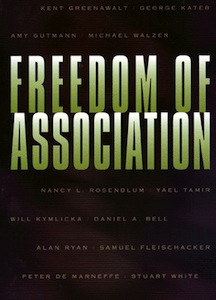 This writer hits the nail on the head. Our society (or more accurately, our political elite and our human rights professionals) are so afraid of the idea of discrimination, that even when “discrimination” is totally justifiable or even, dare I write it, good, then the gloves come off, the human rights police are dispatched and the offending persons or institutions are brought to heel.
Indeed, that is what seems to be going on with the change in Christian Horizons' employment policy. They had a complaint a few years back which ended up in front of a human rights tribunal (see a summary of the facts of that case here). The tribunal ruled that, even though Christian Horizons was a Christian organization, they couldn’t limit their hiring to only Christians (or, if they could, the organization was not allowed to define what “Christian” meant in either doctrine or conduct).
As this column in the Ottawa Citizen correctly argues, limiting hiring to similarly identifying folks should not be seen as discrimination but rather association. The freedom of association is a fundamental freedom, protected by section 2(d) of the Charter. This argument corrects the false beliefs expressed in an earlier editorial in the same paper which suggests that the government can never contract with any association that defines itself as something, be it by creed or culture or philosophical or political outlook, etc.
The funny thing is, the Tribunal itself didn’t have a problem with the public funding of the organization (see para. 116). And the term “public funding” is a little misleading anyway – in actual fact, the government contracts with a number of different organizations, one of which is Christian Horizons. The government is not just doling out funds – it’s paying for a service, and by all accounts, uncontested by anyone, Christian Horizons delivers a great service at a great price.
I think there is one way in which religious, cultural, fraternal and other types of institutions and organizations and associations can be better protected from the prying eyes and inquisitive, meddling and expensive interference of the State: the Ontario Human Rights Code should be amended. Currently, section 24(1)(a) allows for “discrimination” in employment, for the purposes of protecting associational rights. But that provision is very narrowly available. This is what the section states:
24. (1) The right under section 5 to equal treatment with respect to employment is not infringed where:
(a) a religious, philanthropic, educational, fraternal or social institution or organization that is primarily engaged in serving the interests of persons identified by their race, ancestry, place of origin, colour, ethnic origin, creed, sex, age, marital status or disability employs only, or gives preference in employment to, persons similarly identified if the qualification is a reasonable and bona fide qualification because of the nature of the employment;
That last part, the underlined section, is problematic. Who decides if the qualification is reasonable? And what is reasonable? The case involving Christian Horizons had many different opinions on what was reasonable: the employer felt it was reasonable to limit hiring to Christians as defined by the staff (and outlined in their two statements, one of faith, one of conduct), the Tribunal felt that limiting hiring to just Christians was unreasonable, and the Divisional Court later ruled that limiting employment to Christians was reasonable, but defining what is acceptable Christian activity was unreasonable.
The latter two opinions violate the freedom of association, but neither the Tribunal nor the Divisional Court was required to defend their position and their violation of section 2(d) of the Charter because the Charter argument was never made.
We, the people, can make a change happen though: that underlined sentence in section 24 should be removed. If a religious, philanthropic, educational, fraternal or social institution (and I would add cultural institutions as well) hire only similarly identifying people, that should be enough – the government should butt out! Canadians should have the right to not only associate with like-minded folks for communal activity, they should also be able to define the boundaries of that association and to whom it will or will not apply. Anything less is State-sanctioned bullying.
