




Main Menu
Resources
Facebook Fans

Latest News
- 1
- 2
- 3
- 4
- 5
- 6
- 7
- 8
- 9
- 10
- 11
- 12
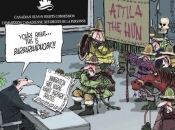 Barbarian-phobic
We couldn't resist posting this one! Check out the editorial cartoon by Brian Gable, from the Globe and Mail:
Read more
Barbarian-phobic
We couldn't resist posting this one! Check out the editorial cartoon by Brian Gable, from the Globe and Mail:
Read more
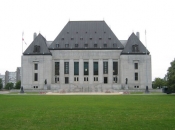 Supreme Court Ruling on Free Speech tomorrow!
The Supreme Court of Canada will release the long-awaited decision on the Bill Whatcott case. We reported on that case when it was heard 16 months ago (click here to read up on the case). We will post the results as soon as we know what they are. In the meantime, you are on notice that whatever the decision is, we must work to eliminate t...
Read more
Supreme Court Ruling on Free Speech tomorrow!
The Supreme Court of Canada will release the long-awaited decision on the Bill Whatcott case. We reported on that case when it was heard 16 months ago (click here to read up on the case). We will post the results as soon as we know what they are. In the meantime, you are on notice that whatever the decision is, we must work to eliminate t...
Read more
 But some animals are more equal than others
From the National Post: The Ontario Human Rights Tribunal has dismissed a complaint against a women’s studies professor who fought a Catholic volunteerism program at Brock University, saying [the professor's] anti-Catholic comments were offensive, but not akin to discrimination.
Although the complainant was treated differently due to his...
Read more
But some animals are more equal than others
From the National Post: The Ontario Human Rights Tribunal has dismissed a complaint against a women’s studies professor who fought a Catholic volunteerism program at Brock University, saying [the professor's] anti-Catholic comments were offensive, but not akin to discrimination.
Although the complainant was treated differently due to his...
Read more
 Alberta court of appeal dismisses appeal against Boisson
The Calgary Sun reports that, after a legal fight lasting nearly 11 years over a letter to the editor, Prof. Darren Lund is disappointed Alberta’s Court of Appeal dismissed his case, allowing “free reign to hate mongers”. Rev. Stephen Boisson is the minister who, after writing and publishing this letter in his local paper was fined and o...
Read more
Alberta court of appeal dismisses appeal against Boisson
The Calgary Sun reports that, after a legal fight lasting nearly 11 years over a letter to the editor, Prof. Darren Lund is disappointed Alberta’s Court of Appeal dismissed his case, allowing “free reign to hate mongers”. Rev. Stephen Boisson is the minister who, after writing and publishing this letter in his local paper was fined and o...
Read more
 Head of Canadian Human Rights Tribunal on Stress Leave
The working atmosphere of the CHRT begs the question - if it needs to be investigated for harassment among other things, how can it be in charge of determining "human rights" offenses for the nation?
Selection from the Vancouver Sun, April 23 2012: The Ottawa Citizen has also learned that the Office of the Public Sector Integrity Commis...
Read more
Head of Canadian Human Rights Tribunal on Stress Leave
The working atmosphere of the CHRT begs the question - if it needs to be investigated for harassment among other things, how can it be in charge of determining "human rights" offenses for the nation?
Selection from the Vancouver Sun, April 23 2012: The Ottawa Citizen has also learned that the Office of the Public Sector Integrity Commis...
Read more
 Press Release
For Immediate Release – November 23, 2011 (Ottawa, ON): Stand Up For Freedom Canada calls on all members of Parliament to support Bill C-304, “An Act to Amend the Human Rights Act”. Last night, Bill C-304 was read and debated in the House of Commons. The bill, introduced by MP Brian Storseth, seeks to ensure greater protection of free...
Read more
Press Release
For Immediate Release – November 23, 2011 (Ottawa, ON): Stand Up For Freedom Canada calls on all members of Parliament to support Bill C-304, “An Act to Amend the Human Rights Act”. Last night, Bill C-304 was read and debated in the House of Commons. The bill, introduced by MP Brian Storseth, seeks to ensure greater protection of free...
Read more
Poll
Paste Into Your Blog
 Policing Hurt Feelings
| Policing Hurt Feelings |
 |
 |
 |
| Thursday, 27 October 2011 22:46 |


The various Canadian human rights codes were not necessarily designed to protect hurt feelings of designated groups. The intention was to prevent a situation in which an person was denied basic goods and services on the basis of some prejudice or another. Yet we hear again and again from editorials critical of the rights racket that the Commissions and Tribunals are indeed prosecuting individuals and organizations for hurting the feelings of others, often without any intention to do so. How did this happen? One case that is routinely cited to justify the expansion into policing hurt feelings is from the BC Human Rights Tribunal, which is well known for their liberal interpretations and habit of stretching definitions. In Radek vs Henderson Development (Canada) and Securigard Services, an aboriginal woman claims she was mistreated by security guards at a downtown The tribunal member, Lindsay Lister (who is no longer with the BCHRT) distilled a selection of her favorite books and musings by jurors past on the topic of discrimination, creating a multi-headed hydra which consumes virtually any and every possible defence to discrimination. They include (emphasis added): - A valid reason is not a defence, since discrimination might still be a “factor” leading to the discriminatory conduct - The absence of intent or motivation is not a defence; the effect of the actions on the complainant is the focus of the enquiry - Direct evidence of discrimination is not required; inferences are enough - Discrimination is usually the result of subtle unconscious beliefs, biases, and prejudices. Going by this set of criteria, it’s clear that the only thing required for a complaint to succeed is for the complainant to believe that he or she was discriminated against, i.e. hurt feelings. This criteria was used to convict constable Michael Shaw of unconscious racism in 2009, solely on the basis of the complainant’s belief that the officer was racist. Let’s apply this to a contemporary test case. Earlier this week, two lesbians were asked to leave a Tim Horton’s by the manager after a customer (a pastor) complained of their public displays of affection. Indignant, the lesbians began to organize a protest, and considered launching a human rights complaint. Would that complaint succeed? You bet. The fact that the manager had a good reason – their exuberant displays of affection were bordering on the obscene – isn’t a defence since their identity as lesbians might still have been a “factor”. The fact that the pastor didn’t even know they were lesbians (one of the women claims she is androgynous, and appears much like a man) is not a defence, since no intent or motivation is required. And the fact that the pastor presides over a gay-friendly church that welcomes homosexuals is irrelevant – the pastor is already assumed to be unconsciously homophobic. Indeed, the only thing needed for the complaint to succeed is for the complainants to prove that there was injury to their “dignity, feelings, and self-respect”. After all, that’s the focus of the enquiry. Don’t let anyone tell you that the Commissions and Tribunals aren’t in the business of protecting hurt feelings. It is actually clearly stated in most human rights codes. And there’s no defence to a charge of hurt feelings. |