


Main Menu
Resources
Facebook Fans

Latest News
- 1
- 2
- 3
- 4
- 5
- 6
- 7
- 8
- 9
- 10
- 11
- 12
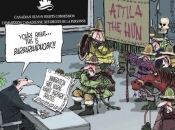 Barbarian-phobic
We couldn't resist posting this one! Check out the editorial cartoon by Brian Gable, from the Globe and Mail:
Read more
Barbarian-phobic
We couldn't resist posting this one! Check out the editorial cartoon by Brian Gable, from the Globe and Mail:
Read more
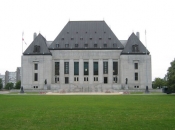 Supreme Court Ruling on Free Speech tomorrow!
The Supreme Court of Canada will release the long-awaited decision on the Bill Whatcott case. We reported on that case when it was heard 16 months ago (click here to read up on the case). We will post the results as soon as we know what they are. In the meantime, you are on notice that whatever the decision is, we must work to eliminate t...
Read more
Supreme Court Ruling on Free Speech tomorrow!
The Supreme Court of Canada will release the long-awaited decision on the Bill Whatcott case. We reported on that case when it was heard 16 months ago (click here to read up on the case). We will post the results as soon as we know what they are. In the meantime, you are on notice that whatever the decision is, we must work to eliminate t...
Read more
 But some animals are more equal than others
From the National Post: The Ontario Human Rights Tribunal has dismissed a complaint against a women’s studies professor who fought a Catholic volunteerism program at Brock University, saying [the professor's] anti-Catholic comments were offensive, but not akin to discrimination.
Although the complainant was treated differently due to his...
Read more
But some animals are more equal than others
From the National Post: The Ontario Human Rights Tribunal has dismissed a complaint against a women’s studies professor who fought a Catholic volunteerism program at Brock University, saying [the professor's] anti-Catholic comments were offensive, but not akin to discrimination.
Although the complainant was treated differently due to his...
Read more
 Alberta court of appeal dismisses appeal against Boisson
The Calgary Sun reports that, after a legal fight lasting nearly 11 years over a letter to the editor, Prof. Darren Lund is disappointed Alberta’s Court of Appeal dismissed his case, allowing “free reign to hate mongers”. Rev. Stephen Boisson is the minister who, after writing and publishing this letter in his local paper was fined and o...
Read more
Alberta court of appeal dismisses appeal against Boisson
The Calgary Sun reports that, after a legal fight lasting nearly 11 years over a letter to the editor, Prof. Darren Lund is disappointed Alberta’s Court of Appeal dismissed his case, allowing “free reign to hate mongers”. Rev. Stephen Boisson is the minister who, after writing and publishing this letter in his local paper was fined and o...
Read more
 Head of Canadian Human Rights Tribunal on Stress Leave
The working atmosphere of the CHRT begs the question - if it needs to be investigated for harassment among other things, how can it be in charge of determining "human rights" offenses for the nation?
Selection from the Vancouver Sun, April 23 2012: The Ottawa Citizen has also learned that the Office of the Public Sector Integrity Commis...
Read more
Head of Canadian Human Rights Tribunal on Stress Leave
The working atmosphere of the CHRT begs the question - if it needs to be investigated for harassment among other things, how can it be in charge of determining "human rights" offenses for the nation?
Selection from the Vancouver Sun, April 23 2012: The Ottawa Citizen has also learned that the Office of the Public Sector Integrity Commis...
Read more
 Press Release
For Immediate Release – November 23, 2011 (Ottawa, ON): Stand Up For Freedom Canada calls on all members of Parliament to support Bill C-304, “An Act to Amend the Human Rights Act”. Last night, Bill C-304 was read and debated in the House of Commons. The bill, introduced by MP Brian Storseth, seeks to ensure greater protection of free...
Read more
Press Release
For Immediate Release – November 23, 2011 (Ottawa, ON): Stand Up For Freedom Canada calls on all members of Parliament to support Bill C-304, “An Act to Amend the Human Rights Act”. Last night, Bill C-304 was read and debated in the House of Commons. The bill, introduced by MP Brian Storseth, seeks to ensure greater protection of free...
Read more
Poll
Paste Into Your Blog
 Press Release
| Press Release |
 |
 |
 |
| Wednesday, 23 November 2011 08:46 |


When asked for the government’s position on Bill C-304, the Hon. Rob Nicholson, Minister of Justice and Attorney General of Canada stated that, “our government believes that section 13 is not an appropriate or effective means for combatting hate propaganda. We believe the Criminal Code is the best vehicle to prosecute these crimes.” “Our freedom is one of the most important things that we cherish in this great nation,” explains Neil Dykstra, a representative of the national Stand Up For Freedom Campaign. “Many Canadians are not aware that our fundamental Charter freedoms are being undermined by commissions and tribunals both at the federal and the provincial levels. It is about time that our federal government stood up for freedom of expression, for the protection of a diverse marketplace of ideas, and against the chill that the Human Rights Act places on political discourse. Bill C-304 is a small but important first step towards greater protection of our freedoms.” Stand Up For Freedom Canada believes Bill C-304 ought to garner support from all parties and all members. Mr. Nicholson urged the opposition to “get onside with the media. Maclean’s magazine, the National Post and even the Toronto Star all say this section should go.” Mr. Storseth also stated that his bill “has the wide-ranging support of journalists, civil libertarians and the Muslim Canadian Congress.” In 2008, human rights expert Richard Moon recommended the removal of section 13 of the Act in a thorough report commissioned by the Canadian Human Rights Commission itself. “The censorship of hate speech should be limited to speech that explicitly or implicitly threatens, justifies or advocates violence against the members of an identifiable group,” Moon states. “The Criminal Code hate speech provisions offer an effective response to hate speech while respecting the public and constitutional commitment to freedom of expression.” “There is much at stake with the passage of this bill,” adds André Schutten, a lawyer and member of the Stand Up For Freedom team. “If Bill C-304 is defeated, Parliament will in effect be encouraging censorship by its bureaucratic agencies. This will embolden the human rights tribunals and commissions to continue and increase their targeted persecution of politically incorrect opinions and ideas.” Member of Parliament Brent Rathgeber stated in support of the bill, “Free speech, if it is to exist, cannot be subject to some bureaucracy. There is no such thing as government regulated free speech. Either there is free speech or there is not.” “The fact that Bill C-304 is not a government bill is disappointing,” added Dykstra. “It really should have been a priority for any conservative government that values freedom. Because Mr. Storseth’s bill is a private member’s bill, it is not guaranteed to pass. While we applaud the government’s support of the bill, we must urge all Canadians to contact their Member of Parliament to support freedom of expression in Canada, to support Bill C-304. We also encourage Canadians to learn the facts about the human rights industry in Canada for themselves by going to the website www.HumanRightsCommissions.ca. They will also find tools there to contact their MP on this bill.” -- – To arrange an interview with a Stand Up for Freedom Canada! campaign team member, please contact This e-mail address is being protected from spambots. You need JavaScript enabled to view it |
 For Immediate Release – November 23, 2011 (Ottawa, ON): Stand Up For Freedom Canada calls on all members of Parliament to support Bill C-304, “An Act to Amend the Human Rights Act”. Last night, Bill C-304 was read and debated in the House of Commons. The bill, introduced by MP Brian Storseth, seeks to ensure greater protection of freedom of expression in Canada by removing the government’s power to censor speech through section 13 and 54 of the Canadian Human Rights Act.